
ISO 14644-1 Class 8 – The Data Centre Cleaning Standard
The international standard for cleanrooms, clean zones and controlled environments. Data halls, server rooms, comms rooms, MERs and SERs are controlled environments.
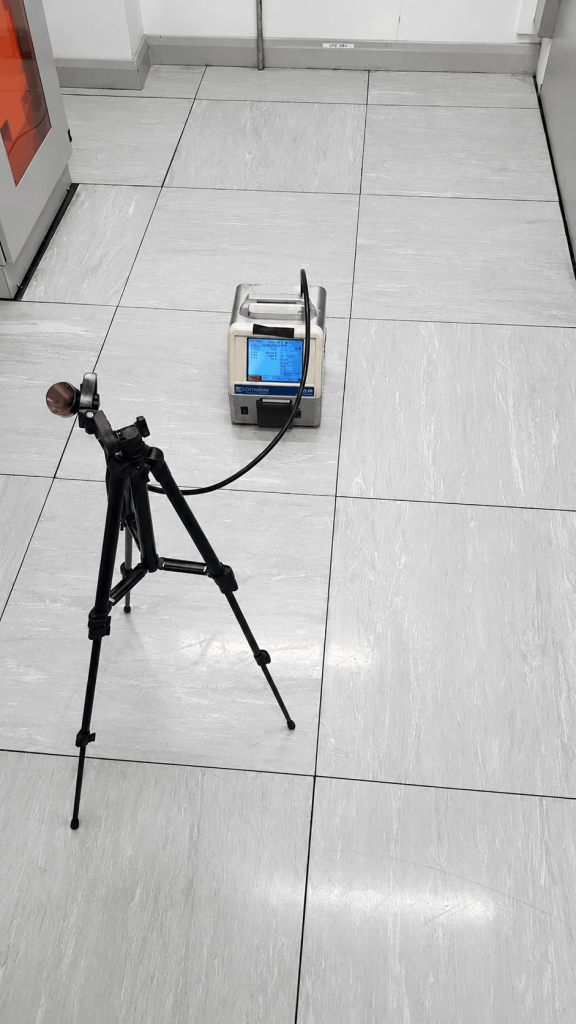
ISO 14644-1 defines the international standard for classifying air cleanliness by particle concentration in controlled environments. Equipment manufacturers may also specify environmental cleanliness requirements for critical IT equipment. NVIDIA, for example, specifies ISO 14644-1 Class 8 conditions for the operating environment of certain networking equipment. Indeed for their Bluefield-2 DPU they state that failure to meet the environmental requirements listed in this user manual may void the warranty.
IT Cleaning Ltd uses ISO 14644-1 Class 8 particle concentration limits as an objective benchmark for assessing airborne cleanliness within Data Centres, Data Halls, Server Rooms and Comms Rooms, combined with the removal of visible dust from accessible surfaces.
ISO 14644 classes explained.
The yardstick is particles per cubic metre of air — typically measured at 0.5 µm to 5 µm.
ISO Class
0.5 µm particles / m³
Environment type
ISO Class 1
10
Semiconductor cleanroom
ISO Class 5
3,520
Surgical suite / Pharma
ISO Class 8
3,520,000
Data Centre / Server Room
Class 1 is the most stringent (microchip fabrication). Class 8 defines the cleanliness level appropriate for mission-critical IT environments. Some specifiers still call this a “5 Micron Clean” or “Clinical Standard” — Class 8 is the correct modern classification.
How ISO 14644 Applies to Data Centre Environments
Classification of air cleanliness
ISO 14644-1:2015 specifies the classification of air cleanliness by particle concentration and defines cleanliness classes from ISO Class 1 to ISO Class 9.
Testing & validation
ISO 14644-3 procedures for particulate measurement using a calibrated Solair 5100+ counter.
Design & maintenance
Guidelines for how controlled environments should be constructed and maintained between cleans.
Certificate of Conformity
A detailed airborne particle test report and Certificate of Conformity are issued following successful testing against the specified ISO 14644-1 Class 8 particle concentration limits.
Even Invisible Dust Can Present a Risk
Particulate contamination can accumulate on cooling components, fans and sensitive electronic equipment, potentially affecting airflow, thermal performance and equipment reliability.
- Blocks server airflow and raises operating temperatures.
- Wears out cooling fans and rotating parts.
- Creates electrical shorts (static) and corrosion via ionic migration.
- Causes unexplained downtime and hardware failure.