0844 5555 171



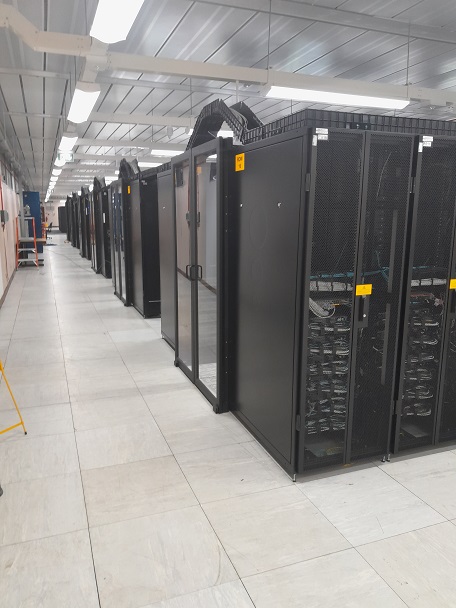
How Often Should a Data Hall Be Cleaned? Modern Data Halls contain millions of pounds worth of critical IT infrastructure. Servers, storage arrays, network switches, power distribution equipment and cooling systems all work together to provide the services that businesses rely on every day.
Despite this, one of the most overlooked aspects of Data Centre management is cleaning.
A common question we are asked at IT Cleaning Ltd is:
“How often should a Data Hall be professionally cleaned?”
The answer depends on several factors, but one thing is certain: contamination never stops accumulating.
Why Data Hall Cleaning Is Important
Data Halls are designed to provide a controlled environment for IT equipment. However, even facilities with high-quality filtration systems are continually exposed to airborne contamination.
Dust can enter the environment through:
- Personnel traffic. Foot and wheel borne.
- Construction and refurbishment work.
- Air handling systems. Wearing belts etc.
- Cable and floor penetrations.
- External air introduced through economised cooling systems.
- Packaging materials and equipment deliveries.
Once inside the Data Hall, airborne particles can settle on equipment, accumulate within floor voids and become trapped within servers and network equipment.
Over time this contamination can:
- Restrict airflow.
- Reduce cooling efficiency.
- Increase equipment temperatures.
- Cause cooling systems to work harder.
- Increase energy consumption.
- Contribute to equipment failures and downtime.
- Recommended Data Hall Cleaning Frequencies
There is no single cleaning frequency that suits every facility. However, the following guidelines provide a good starting point.
Standard Enterprise Data Halls
For most enterprise Data Centres and Comms Rooms, a professional clean every 12 months is recommended.
This allows contamination to be removed before it begins to affect equipment performance and cooling efficiency.
High-Density AI and HPC Data Centres
Facilities operating AI clusters, GPU farms and High-Performance Computing (HPC) environments should consider cleaning every 6 to 12 months.
These environments process significantly greater volumes of air through servers, increasing the rate at which airborne contamination is drawn into equipment.
As rack power densities continue to increase, maintaining cleanliness becomes increasingly important.
Low-Risk Environments
Facilities with excellent filtration, low personnel traffic and minimal external contamination sources may be suitable for cleaning every 18 to 24 months.
However, cleanliness testing should still be undertaken to verify environmental conditions.
Following Construction or Refurbishment Works
Any construction activity within or adjacent to a Data Hall can generate large quantities of airborne contamination.
Following refurbishment works, cable installation projects or builders’ activities, a specialist Data Hall clean should be completed before the area is returned to normal operation.
In many cases this will involve a builders clean followed by an ISO 14644-1 compliant technical clean and validation survey/certification.
Don’t Rely on Visual Inspection Alone
One of the biggest mistakes organisations make is assuming that if a Data Hall looks clean, it is clean.
Most particles that present a risk to IT equipment are invisible to the naked eye, as they do not reflect enough light.
Particles measuring 0.5 microns and smaller cannot normally be seen, yet they can still accumulate inside servers, switches and cooling equipment.
By the time dust becomes visible on cabinet tops, cable trays or floor voids, contamination has often been accumulating for many months.
Let Testing Determine the Cleaning Frequency
The most effective way to determine how often a Data Hall should be cleaned is through regular airborne particulate monitoring.
Monitoring allows facilities teams to understand how contamination levels are changing over time and provides evidence-based cleaning schedules.
Many organisations now choose to combine professional cleaning with airborne particulate testing to ISO 14644-1 standards.
This approach provides confidence that the environment remains suitable for critical IT infrastructure and demonstrates compliance with industry best practice.
Signs Your Data Hall May Need Cleaning
You may require professional Data Hall Cleaning sooner than planned if you notice:
- Dust accumulation on cabinet tops.
- Contamination within floor voids.
- Dirty server fan grilles.
- Increased equipment fan noise.
- Higher than normal operating temperatures.
- Cooling system alarms.
- Missing floor grommets.
- Evidence of contamination entering through air handling systems.
- Recent construction or refurbishment works.
- Best Practice Recommendation
For most facilities, annual Data Hall Cleaning combined with airborne particulate testing provides an effective contamination control strategy.
High-density AI environments, mission-critical facilities and sites undergoing frequent changes may benefit from more frequent cleaning and monitoring.
The objective is not simply to make the Data Hall look clean. The objective is to maintain a controlled environment that protects critical infrastructure, supports efficient cooling, reduces operational risk and helps maximise the lifespan of expensive IT equipment.
When compared with the value of the infrastructure it protects, professional Data Hall Cleaning remains one of the most cost-effective preventative maintenance activities available to Data Centre operators.
Need Professional Data Hall Cleaning?
IT Cleaning Ltd has been providing specialist Data Centre Cleaning, Data Hall Cleaning, Server Room Cleaning and Comms Room Cleaning services throughout the UK since 2002.
Our services include:
- Cleaning to ISO 14644-1 Class 8 standards.
- Floor void cleaning.
- Internal IT equipment cleaning.
- Airborne particulate monitoring.
- ISO 14644 validation surveys.
- ISO 14644 Detailed reports and certification.
Contact us today to discuss your Data Hall Cleaning requirements.